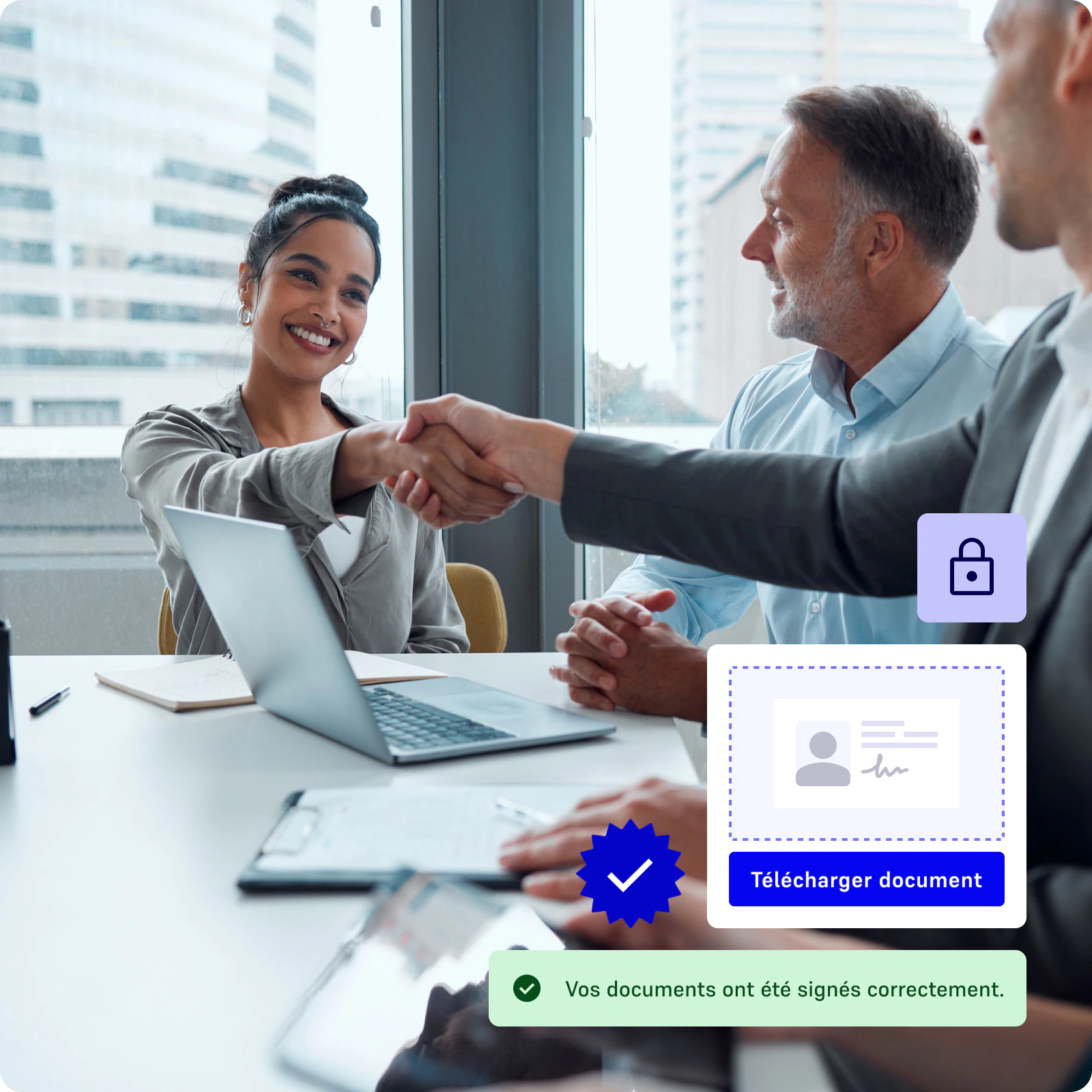









The offer letter is signed. The contract is countersigned. The NDA is filed.
In a paper-based world, that sequence takes days: couriers, printers, scanners, chasing signatures across time zones. In 2026, it takes minutes. And for HR teams managing hundreds of hires a year across multiple countries, that difference is no longer just a convenience: it’s a competitive advantage.
Across Europe, HR departments are replacing document-heavy, manual onboarding processes with end-to-end digital workflows. The shift is being driven by three forces converging at once: remote and hybrid work becoming permanent, tighter regulatory requirements around data and identity, and a new generation of employees who expect their employer’s processes to be as seamless as the apps they use every day.
This article explains what that transition looks like in practice, what it means for compliance, and why 2026 is the year most HR teams can no longer afford to wait.
The Hidden Cost of Paper in HR
Most HR leaders know paper-based processes are slow. Fewer have quantified just how costly they are.
Consider a mid-sized company onboarding 20 new employees per month. Each hire typically involves an employment contract, an NDA, a data processing consent form, and at least one benefits or policy document. With physical signatures, each package requires printing, posting or hand-delivery, waiting for return, scanning, and manual filing. When a document is lost, unsigned, or incorrectly dated, the process starts again.
The operational cost is measurable: in staff hours, courier fees, and storage. The legal cost is harder to see until something goes wrong: a dispute over whether a contract was signed, a payslip that can’t be produced in an audit, a termination letter with no verifiable timestamp.
Beyond the direct costs, there is a subtler problem: paper processes create silos. HR holds contracts. Finance holds payslips. Legal holds NDAs. None of these systems speak to each other, and retrieving a complete employee record under time pressure (for a labour inspection, a court case, or a GDPR data subject request) can take days.
What a Digital HR Workflow Actually Looks Like
Replacing paper doesn’t mean simply scanning documents and emailing PDFs. A genuine digital HR workflow connects identity, signature, and storage into a single, traceable process.
Here is what that looks like across a typical employee lifecycle:
Recruitment and offer stage. A candidate receives a digitally formatted offer letter via a secure link. They verify their identity (using facial recognition, document scanning, or their national digital ID) and sign electronically. The signed document is timestamped and stored with a full audit trail. No printing, no scanning, no waiting for a postal return.
Onboarding. The employee receives a digital onboarding pack: employment contract, company policies, tax declaration forms. Each document is sent for signature in sequence or in parallel. Completion status is visible in real time to the HR team. The process can be completed from a phone before the employee’s first day.
During employment. Amendments to contracts, promotion letters, training acknowledgements, and remote work agreements are handled the same way. Payslips can be delivered to a certified personal inbox with legal proof of receipt, replacing postal delivery and eliminating disputes about whether a document was received.
Offboarding. Termination letters, settlement agreements, and exit documentation are signed and archived with the same level of legal rigour as the original contract, creating a clean, auditable record for any future dispute.
Compliance Is No Longer Optional
For many HR teams, compliance was the original driver of digitalisation, and in 2026, the regulatory environment has made it more pressing than ever.
The eIDAS regulation, updated in 2024, establishes a clear framework for electronic signatures across the European Union. It recognises three tiers: simple, advanced, and qualified electronic signatures. For most employment documents, an advanced electronic signature, which links the signature to the signer’s verified identity and detects any subsequent tampering, provides the legal weight equivalent to a handwritten signature. For higher-stakes documents in certain jurisdictions, a qualified electronic signature, issued by a certified trust service provider, carries the same legal force as a notarised signature.
GDPR adds a further layer. Employee data, including signed contracts, must be stored securely, with clear retention policies and the ability to respond to data subject access requests. A digital document management system, properly configured, makes this straightforward. A filing cabinet does not.
NIS2, the EU’s updated cybersecurity directive, also applies to organisations that handle sensitive data at scale, which increasingly includes large HR departments managing identity documents, financial data, and health information.
The point is not that HR teams need to become compliance experts. It is that the tools they choose now will either simplify their compliance obligations or complicate them. A digital workflow built on certified, auditable infrastructure (rather than email attachments and local folders) is the difference.
The Remote Hiring Reality
The normalisation of remote and international hiring has made paper processes functionally unworkable for many organisations.
A candidate in Berlin, hired by a company headquartered in Madrid, cannot easily sign a physical contract. A freelancer in Warsaw, engaged by a Paris-based firm, does not have a local HR contact to hand documents to. A global mobility team managing employee relocations across five countries cannot rely on postal services with different delivery timelines in each.
Digital HR workflows solve this directly. Signed documents arrive in minutes regardless of geography. Identity verification can be completed remotely using biometric checks against official ID documents from over 200 countries. The legal validity of the signature does not depend on physical presence: it depends on the certification of the process itself.
This matters increasingly in an era where talent pools are European or global, not local.
What HR Teams Are Saying
The practical impact is clearest in the numbers organisations report after making the transition.
Onboarding time that previously took two weeks, from sending contracts to receiving signed returns, now takes under 15 minutes. Administrative burden on HR teams drops significantly when documents no longer need to be chased, printed, or manually filed. Candidate experience improves: a seamless, mobile-friendly signing process signals that the company is modern and organised, which matters when competing for talent.
For finance teams working alongside HR, the benefits extend to expense management: qualified electronic seals on digitised receipts make them immediately legally valid and audit-ready, eliminating paper reconciliation entirely.
The 2026 Shift: From Digitisation to Digital Trust
There is an important distinction worth drawing here. Many organisations digitised their HR processes years ago: they moved from paper contracts to emailed PDFs, from filing cabinets to shared drives. That was a useful first step, but it is not the same as a genuinely trusted digital workflow.
A scanned PDF signed with a basic image of a signature carries limited legal weight. A document signed via a certified platform, with a verified identity trail, a qualified timestamp, and tamper-evident sealing, is a different category of asset entirely. It is verifiable, legally enforceable, and built to withstand scrutiny.
In 2026, the convergence of regulation (eIDAS 2.0, GDPR, NIS2), technology (AI-powered identity verification, biometric authentication, qualified archiving), and employee expectations is pushing HR teams past simple digitisation toward genuine digital trust. The organisations making this shift now are not just reducing administrative costs. They are building an HR infrastructure that is legally resilient, scalable across borders, and ready for the regulatory requirements of the next decade.
Getting Started
The transition does not need to happen all at once. Most HR teams start with the highest-volume, highest-friction document type, typically the employment contract, and expand from there.
The key questions to ask when evaluating a digital HR workflow solution are:
- Does it support the three levels of electronic signature (simple, advanced, qualified) so you can choose the right level for each document type?
- Is identity verification integrated, or do you need a separate tool for onboarding and a separate tool for signing?
- Where is data stored, and is it subject to European data protection law?
- Does it include certified long-term archiving, so signed documents remain legally valid for the full retention period?
- Can it integrate with your existing HRIS, ATS, or payroll systems?
The answers to these questions will quickly separate platforms built for compliance-grade HR use from tools designed for simpler signing scenarios.
Signaturit Group from Namirial is Europe’s largest Qualified Trust Service Provider, offering end-to-end digital transaction management for HR teams from identity verification and electronic signatures to certified archiving and qualified document delivery. Discover how HR teams across Europe are using Signaturit to transform their onboarding and contract workflows.